


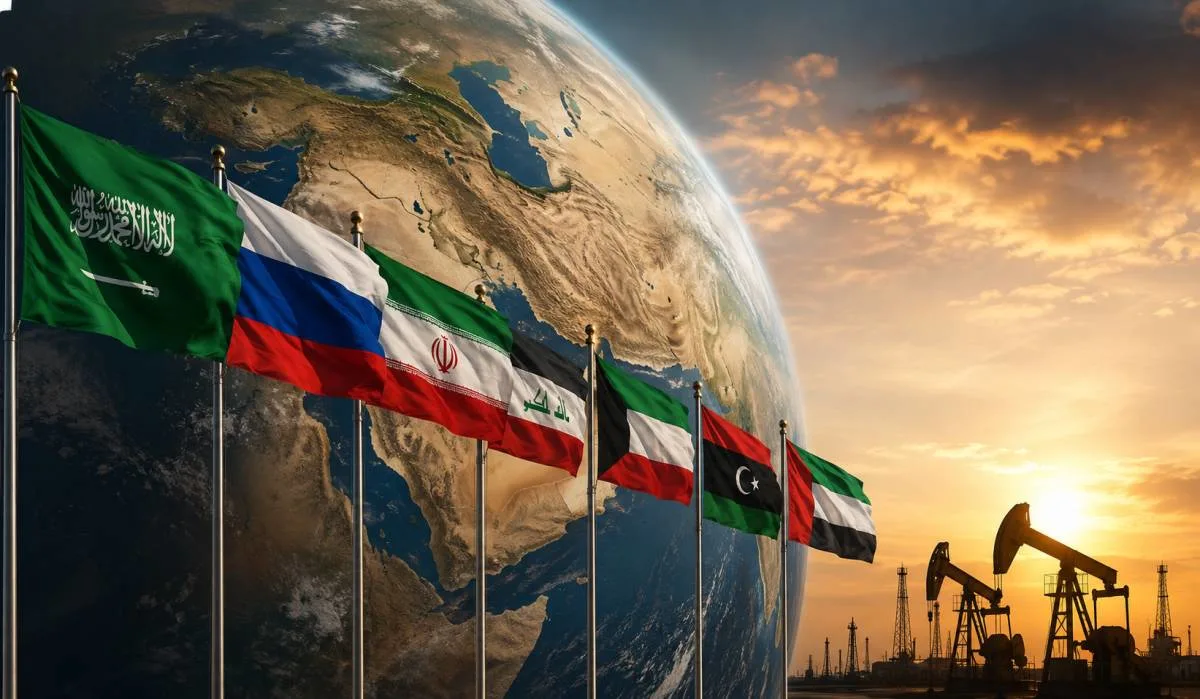
Countries That Control the World's Oil Supply
Countries that control the worlds oil supply play a major role in the global economy. Their oil production levels influence fuel prices, international trade, and energy security across the world. Nations such as Saudi Arabia, the United States, Russia, Iran, the UAE, Brazil, Norway, Kazakhstan, Mexico, and China each contribute differently to global crude oil production. Some control massive reserves, while others influence important shipping routes or production policies through OPEC and OPEC+.
As geopolitical tensions continue to affect energy markets, understanding the countries that control the world's oil supply helps explain why oil prices and global economies can change so quickly.
These energy giants call the shots
The Iran conflict rattles markets and shines a spotlight on the world's petroleum big cheeses. Markets are reeling, and the globe's main crude players will surely hog the limelight. One way or another, the world economy still runs on black stuff, and the main producers wield enormous leverage over supply, supply prices, and the globe's financial wellbeing, along with considerable leverage over manufacturing, spare capacity, and all-important passages like the Strait of Hormuz.
Read More:
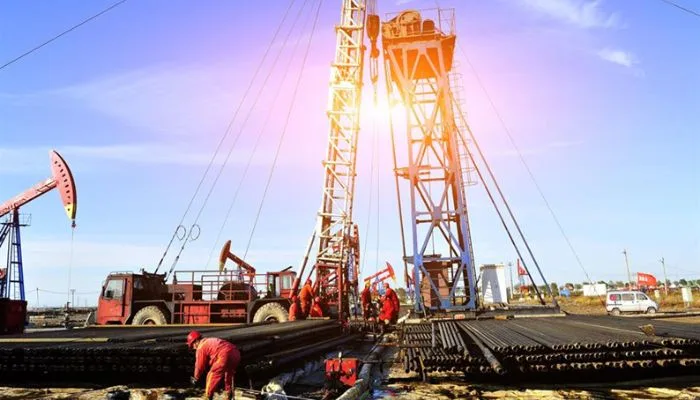
Iran
Iran only yields some 3 per cent of the world’s supply, though it plays a significant role as one of the 12 countries that belong to the powerful OPEC cartel. Its main weapon is its domination of the strategically vital Strait of Hormuz.
By far the world's biggest energy conduit, which carries a fifth of its oil much of it in transit to the region's rapidly growing economies a cut-off of such an important place threatens to create tremors around the globe that would be far more significant than a mere 3 per cent disruption of oil supply.
Mexico
Mexico ranks as the world's 13th largest oil-producing nation and a signatory to OPEC. With a 2025 predicted production rate of around 1.7 million b/pd, Mexico isn't quite as large a player on the world stage as a country like Saudi Arabia or the United States, but its role in the OPEC group definitely makes the nation a more dominant voice in the global oil marketplace regarding supply and cost.
Additionally, with a number of the conflicts breaking out in Iran impacting and potentially disrupting the Gulf supply chain – and to an extent beyond – now the Mexican government, like the other non-Middle Eastern powerhouse oil-exporting states, has become an even larger factor in maintaining the flow of oil on global markets and preventing a price run-up.
Norway
The largest oil producer in Europe and the 12th largest globally, Norway relies heavily on its bountiful fields in the North and Barents seas to fuel the economy. As a non-member of OPEC, Norway's production decisions have outsized influence since North Sea output determines the oil global benchmark, Brent Crude.
"Since Russia's war on Iran we've been seeing increased demand," from Europe and Asian customers, said Bente Sorsell, Senior analyst at Danske Bank. State-controlled major Equinor plans to increase production by 25% through 2030 - taking advantage of higher prices to tap a market that seeks alternatives to Middle East suppliers.
Kazakhstan
Kazakhstan, the 11th biggest global oil producer and a member of OPEC+ that holds voting rights regarding production decisions, exports nearly all its output via the Caspian Pipeline Consortium. This status makes it a critical source of crude for regions outside the Middle East, but it’s also at the mercy of issues affecting the pipeline.
Brazil
The South American nation has now established itself as the ninth-largest oil producer globally, and its significant role as a global oil & gas superpower, along with its oil supply, continues to grow each year.
Brazil officially joined OPEC+ last year and is now setting its sights on eventually surpassing Russia to become the fourth-largest oil producer by 2030. The biggest driver of this impressive growth stems from its offshore pre-salt basins, which consistently churn out cost-effective, light sweet oil.
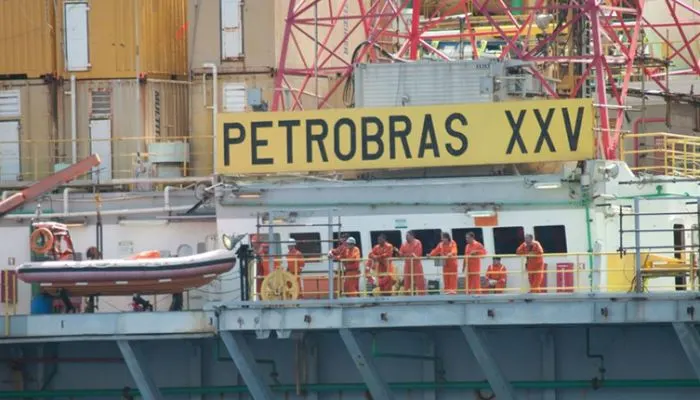
UAE
The oil production in the UAE has dropped by more than one-third due to a blockade preventing oil from leaving the country, which is a result of the closing of the Strait of Hormuz, the crucial trade route that lies off its coast.
Before the outbreak of the Iran war, the UAE held the position of the 8th largest oil producer in the world. However, although it plays an important role within OPEC, its influence on oil markets remains limited as it struggles to find ways to export its oil products abroad.
China
What usually comes to the mind of a regular person from the west about China is a small oil producer that could never produce like Saudi or an American producer. However, China is the world's 6th oil producer (more than Iran); the same country is also the world's biggest oil importer and imports almost entirely in crude from the Middle East and Latin America, and oil makes up more than 25 percent of China's energy basket.
Now that the Iran-U.S. war and Venezuelan conflict threaten global oil supplies a dependency that even Beijing is keenly aware of China is spending big money on transforming its car industry into an electric vehicle powered revolution. It aims to accelerate its growth in green energy to shift away from fossil fuels while continuing to ensure the world's second-largest economy runs and expands, while trying not to.
FAQs
1. Which countries control the world's oil supply?
The major countries that control the world's oil supply include Saudi Arabia, the United States, Russia, Canada, Iraq, China, the UAE, Brazil, Iran, Kuwait, Norway, Kazakhstan, and Mexico due to their high production and influence over global markets.
2. Why is OPEC important in the global oil market?
OPEC coordinates oil production among member countries to help manage supply and stabilize oil prices in international markets.
3. Why is the Strait of Hormuz important for oil supply?
The Strait of Hormuz is one of the world's most important oil shipping routes. Around one-fifth of global oil passes through this narrow waterway, making it vital for international energy trade.
4. Which country is the largest oil producer in the world?
The United States is currently the world's largest oil producer, followed by Saudi Arabia and Russia.
5. How do geopolitical conflicts affect oil prices?
Conflicts involving major oil-producing countries or key transport routes can reduce supply, increase market uncertainty, and lead to higher global crude oil prices.