



How to Protect Stock Portfolio During Market Crash: Simple Guide
Market crashes are scary. Your portfolio value drops fast. You see your hard-earned money disappear. You want to do something. But you do not know what. This guide shows you how to protect stock portfolio during market crash in simple words. You will learn why panic selling is the worst mistake.
You will learn how to build a cash safety net. You will learn how to diversify and rebalance. You will also learn why quality stocks recover and weak ones do not. No complicated terms. Just clear steps that work. Read this guide. Protect your money. Stay calm. Stay invested for the long term.
Why Most People Lose Money in a Crash?
The biggest mistake is selling after prices have already fallen. You lock in your losses. Then when the market recovers, you miss the rebound. You have to pay more to get back in .
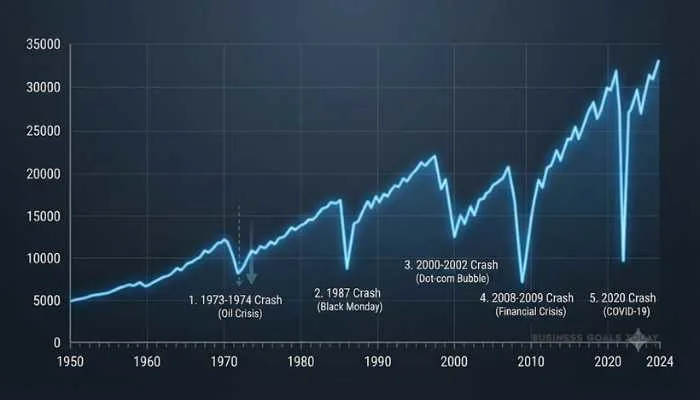
History proves this. In 2020, the S&P 500 lost over a third of its value in weeks. By December that year, it was up nearly 30% . People who sold missed that recovery.
Read More: How to Choose a Good Stock for Investment: A Simple Guide for Beginners
The First Rule: Do Not Panic Sell
You do not lose money until you sell. If you hold, the loss is on paper. If you sell, the loss becomes real. The market has always recovered from crashes. Every single time.
The worst thing you can do is sell your stocks and hold cash. Cash does not grow. It loses value to inflation. You also miss the recovery .
Build a Cash Safety Net
- Warren Buffett's playbook says build a cash stockpile. This gives you money to buy great companies at discount prices when the market falls .
- Set aside one to three years of living expenses in a high-interest savings account or money market fund. If you normally withdraw ₹1,00,000 per year, keep ₹1,00,000 to ₹3,00,000 in this fund .
- This fund does two things. First, it stops you from selling investments during a crash. Second, it gives you money to buy more when prices are low.

Diversify Your Portfolio
Do not put all your money in one type of investment. Spread it across stocks, bonds, and other assets. These assets do not move together. When stocks fall, bonds often rise .
High-quality bonds are the best defence during bear markets. They tend to go up when stocks go down. Even with interest rate changes, bonds have delivered gains in 91% of 12-month periods when stocks declined .
Rebalance Your Portfolio
- Over time, your winning investments grow larger. They take up more of your portfolio. This makes your portfolio riskier than you planned. For example, a stock that was 3% of your portfolio grows to 10%. Now a crash in that stock hurts you more .
- Rebalancing means selling some of your winners and buying more of your underperformers. This keeps your risk level where you want it. Do this once or twice a year. Or when your allocation drifts by 5% or more .
- Rebalancing forces you to sell high and buy low. It is mechanical. It removes emotions from your decisions.
Buy Quality Stocks
- Not all stocks recover from crashes. Weak companies with poor management may never bounce back. Strong companies with solid businesses usually do .
- Focus on companies with strong balance sheets, consistent profits, and competitive advantages. These companies survive rough patches. They emerge stronger.
You May Also Read: Best Long Term Stocks to Build Wealth
Keep a Long-Term View
- Time in the market beats timing the market. If you have a 10-year horizon, a crash is just a temporary dip. The market has always recovered and grown over long periods.
- Some of the market's best days happen right after its worst days. If you sell after a bad day, you may miss the rebound. Out of the worst 20 days in history, the market was up on 17 of the following days .
Quick Summary Table
| Strategy | What It Does |
|---|---|
| Do not panic sell | Avoids locking in losses |
| Cash safety net | Stops forced selling during crash |
| Diversify | Spreads risk across assets |
| Rebalance | Keeps risk level in check |
| Buy quality | Ensures recovery potential |
| Long-term view | Lets compounding work |
FAQs
1. Should I sell my stocks before a market crash?
No. Timing the market is almost impossible. Experts have predicted crashes that never happened. Selling early means you miss recoveries. You also pay taxes on gains. Stay invested for the long term .
2. What is the best asset to hold during a market crash?
High-quality bonds. They tend to rise when stocks fall. Bonds have delivered gains in 91% of periods when stocks declined. Long-term Treasury bonds are a good option .
3. How much cash should I keep for a crash?
Keep one to three years of living expenses in a safe, liquid account. This stops you from selling investments during a downturn. It also gives you money to buy stocks at lower prices .
4. What is portfolio rebalancing?
Rebalancing means adjusting your investments back to your target mix. If stocks grew too large, you sell some and buy bonds. This keeps your risk level where you want it. Do it once or twice a year .
5. Should I buy more stocks during a crash?
If you have cash, yes. Crashes create opportunities to buy quality companies at discount prices. But do not use money you need soon. Only invest what you can afford to hold .
6. What is sequence of returns risk?
This is when market losses happen at the same time you need to withdraw money. It forces you to sell at low prices. This turns temporary losses into permanent damage. A cash safety net prevents this .
7. How long do market crashes last?
Bear markets have happened about every 11 years since 1945. They can last months or years. But the market has always recovered and reached new highs. Time is your friend .
8. Is it safe to keep all my money in stocks?
No. A 100% stock portfolio is risky. Add bonds, gold, or other assets. Diversification reduces the impact of any single crash. It smooths your returns over time .